

Just as the shape of your glass enhances the character of your wine or spirit, the material it’s made from plays an equally important role in your overall experience. From durability and clarity to weight and elegance, each type of glass offers its own unique benefits.
Understanding these differences allows you to select drinkware that not only complements your beverages but also fits seamlessly into your lifestyle—whether you're hosting a celebration or enjoying a quiet evening at home.
Here’s a guide to the most common glass materials, along with their distinct advantages and considerations:
Understanding Different Glassware Materials - What Sets Them Apart?
The Capri Collection: Borderless Borosilicate Construction, Sculptural Silhouettes
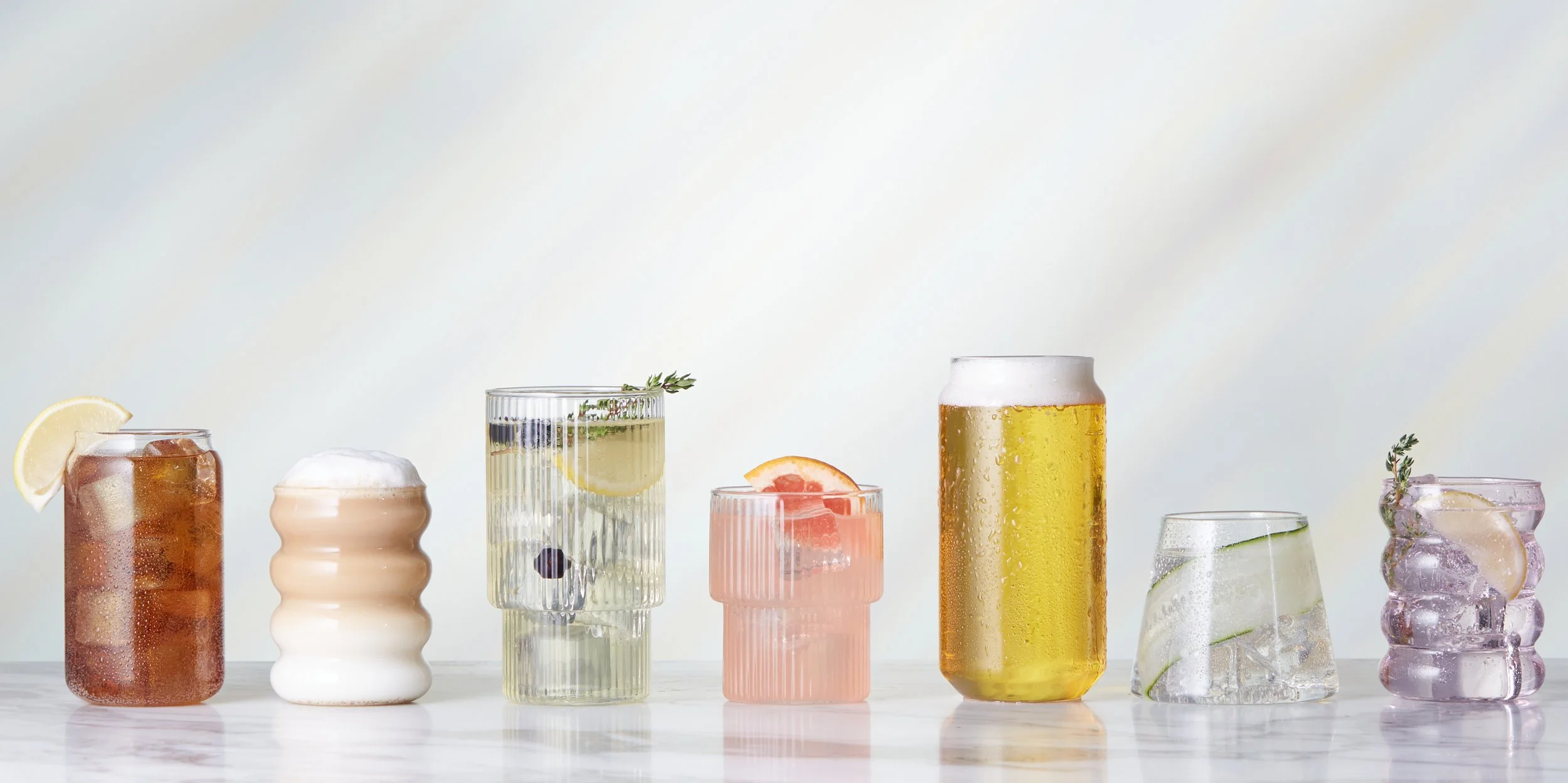
Borosilicate Glass
What is Borosilicate Glass
Borosilicate glass is crafted from silica (a natural form of sand) combined with boron trioxide. This unique composition gives it a much lower thermal expansion than standard glass—meaning it responds far less to temperature changes. In fact, it expands about three times less than traditional soda-lime glass, making it exceptionally resistant to thermal shock.
Pros of Borosilicate Glass
Exceptional Thermal Resistance: Designed to handle both hot and cold beverages to a certain degree without cracking, even with sudden temperature changes.
Pure & Safe Drinking Experience: Made from durable borosilicate glass, this glassware is non-toxic, resistant to chemical leaching, and designed to preserve the pure taste of your drink.
Durable Yet Lightweight: Stronger and more scratch-resistant than soda-lime glass, while maintaining a light, refined feel.
Eco-Friendly Choice: Long-lasting and fully recyclable, making it a sustainable option for modern living.
Cons of Borosilicate Glass
Higher Cost: Its advanced properties and production process make it more expensive than standard glass.
Limited Design Flexibility: A higher melting point makes it more challenging to mold into intricate or highly varied shapes.
Soda-Lime Glass
What is Soda-Lime Glass
Soda-lime glass is the most commonly used glass type, made from silica, sodium carbonate, and calcium oxide. Silica forms the base structure, while sodium carbonate lowers the melting point for easier shaping, and calcium oxide strengthens and stabilizes the final product. The result is the versatile, everyday glassware found in most homes.
Pros of Soda-Lime Glass
Affordable & Accessible: One of the most cost-effective glass options, ideal for everyday use.
Highly Versatile Designs: Its lower melting point allows for a wide range of shapes, styles, and creative forms.
Clear & Functional: Offers good transparency, making it suitable for a variety of beverages.
Cons of Soda-Lime Glass
Lower Thermal Resistance: More susceptible to cracking or breaking when exposed to sudden temperature changes.
Moderate Durability: Not as strong or resilient as more specialized glass types.
Less Chemically Resistant: Slightly more reactive to moisture and certain substances over time compared to higher-grade materials.
The Vulcano Collection: Lead-Free Crystal Masterpiece
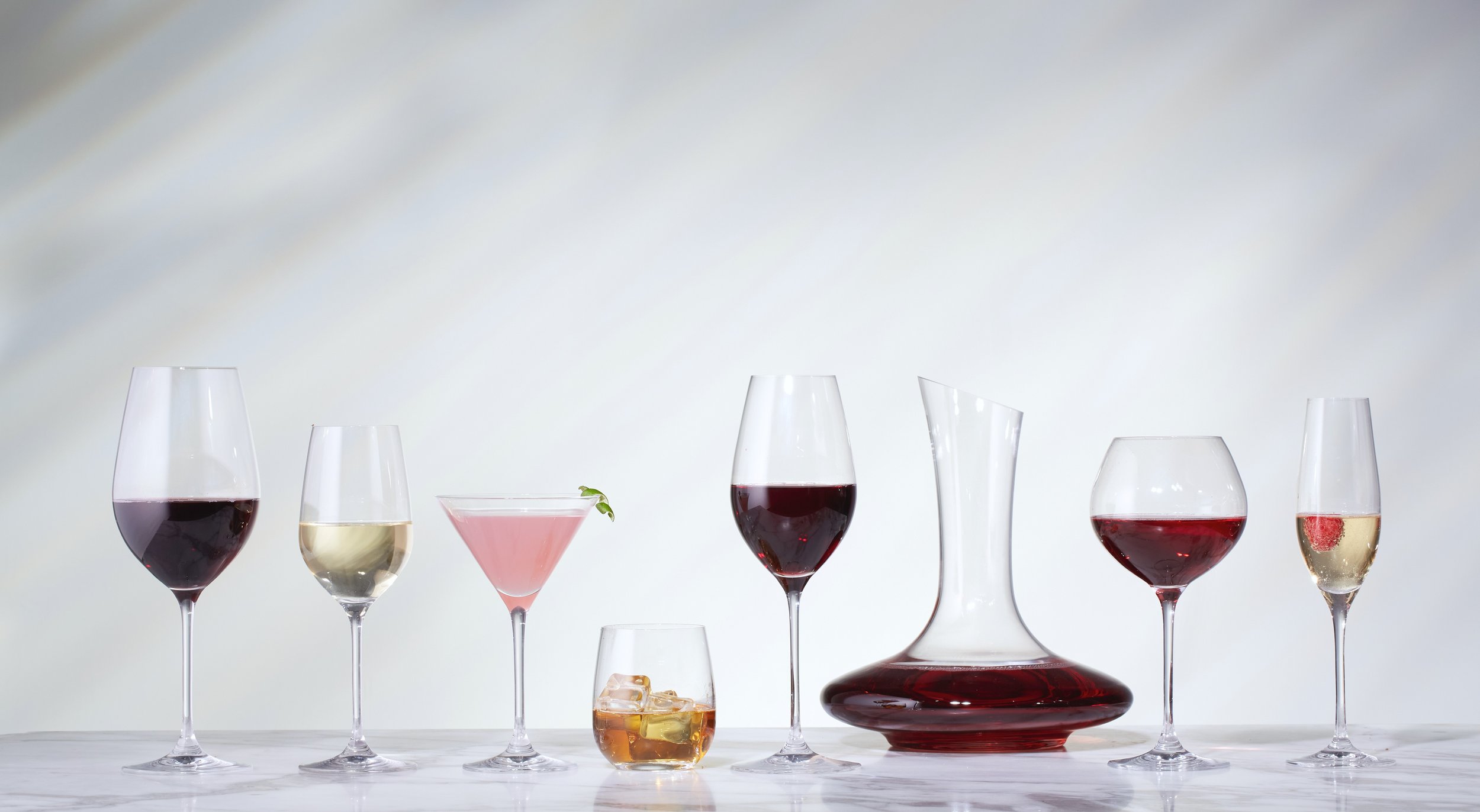
Lead-Free Crystal Glass
What is Lead-Free Crystal Glass
Lead-free crystal glass is made from silica combined with alternative metal oxides such as potassium, barium, zinc, or aluminum oxides. These elements replace traditional lead oxide while still delivering the brilliance and clarity crystal is known for. The result is a material that captures light beautifully, offering exceptional sparkle without the use of lead.
Pros of Lead-Free Crystal Glass
Elegant & Refined: Known for its thin rims, brilliant clarity, and stunning light refraction - perfect for elevating any table setting.
Lightweight Feel: Despite its luxurious appearance, it remains comfortable to hold and enjoy.
Safer & More Sustainable: Free from lead, making it a more environmentally conscious and health-friendly choice.
Cons of Lead-Free Crystal Glass
More Delicate: Typically more brittle and prone to breakage if dropped.
Premium Price Point: Often more expensive due to its refined craftsmanship and visual appeal.
Choosing the Right Material for Every Moment
The material of your glassware shapes more than just its appearance - it influences durability, functionality, and the overall drinking experience. Whether you prioritize resilience for everyday use, versatility for entertaining, or elegance for special occasions, each material offers something unique.
By selecting the right glass material, you’re not just choosing drinkware - you’re enhancing every pour, every toast, and every moment worth savoring.