

Types of Glassware Materials: What Sets Them Apart?
The material used to make your glassware can affect its clarity, durability, weight, appearance, and overall drinking experience. From everyday drinking glasses to elegant wine and cocktail glassware, understanding the differences between glassware materials can help you choose the right option for your home.
Different types of glassware, such as lead-free crystal, borosilicate, and soda-lime glass offer their own advantages. Some are designed for exceptional brilliance and clarity, while others are designed for greater durability and everyday use.
In this guide, we'll explore the different types of glassware materials, their benefits and differences, and what to consider when choosing the best glassware for wine, cocktails, spirits, and everyday drinks.
The Capri Collection: Borderless Borosilicate Construction

Borosilicate Glass
What is Borosilicate Glass?
Borosilicate glass is crafted from silica (a natural form of sand) combined with boron trioxide. This unique composition gives it a much lower thermal expansion than standard glass, meaning it responds far less to temperature changes. In fact, it expands about three times less than traditional soda-lime glass, making it exceptionally resistant to thermal shock.
Because of this, borosilicate glass is known for its resistance to thermal shock and is commonly used for drinkware and cookware, and other products that may experience changes in temperature.
Advantages of Borosilicate Glass
Exceptional Thermal Resistance: Designed to handle both hot and cold beverages to a certain degree without cracking, even with sudden temperature changes.
Pure & Safe Drinking Experience: Made from durable borosilicate glass, this glassware is non-toxic, resistant to chemical leaching, and designed to preserve the pure taste of your drink.
Durable Yet Lightweight: Stronger and more scratch-resistant than soda-lime glass, while maintaining a light, refined feel.
Eco-Friendly Choice: Long-lasting and fully recyclable, making it a sustainable option for modern living.
Disadvantages of Borosilicate Glass
Higher Cost: Borosilicate glass generally requires higher manufacturing temperatures and a more specialized production process, making it more expensive than standard soda-lime glass.
Limited Design Flexibility: A higher melting point makes it more challenging to mold into intricate or highly varied shapes.
Soda-Lime Glass
What is Soda-Lime Glass?
Soda-lime glass is the most commonly used type of glass in the world. It is primarily made from silica, sodium carbonate, and calcium compounds and is widely used for drinking glasses, bottles, jars, windows, and everyday glassware.
Advantages of Soda-Lime Glass
Affordable & Accessible: One of the most cost-effective glass options, ideal for everyday use.
Highly Versatile Designs: Its lower melting point allows for a wide range of shapes, styles, and creative forms.
Clear & Functional: Offers good transparency, making it suitable for a variety of beverages.
Disadvantages of Soda-Lime Glass
Lower Thermal Resistance: More susceptible to cracking or breaking when exposed to sudden temperature changes.
Moderate Durability: Not as strong or resilient as more specialized glass types.
Less Chemically Resistant: Slightly more reactive to moisture and certain substances over time compared to higher-grade materials.
The Vulcano Collection: Lead-Free Crystal Masterpiece
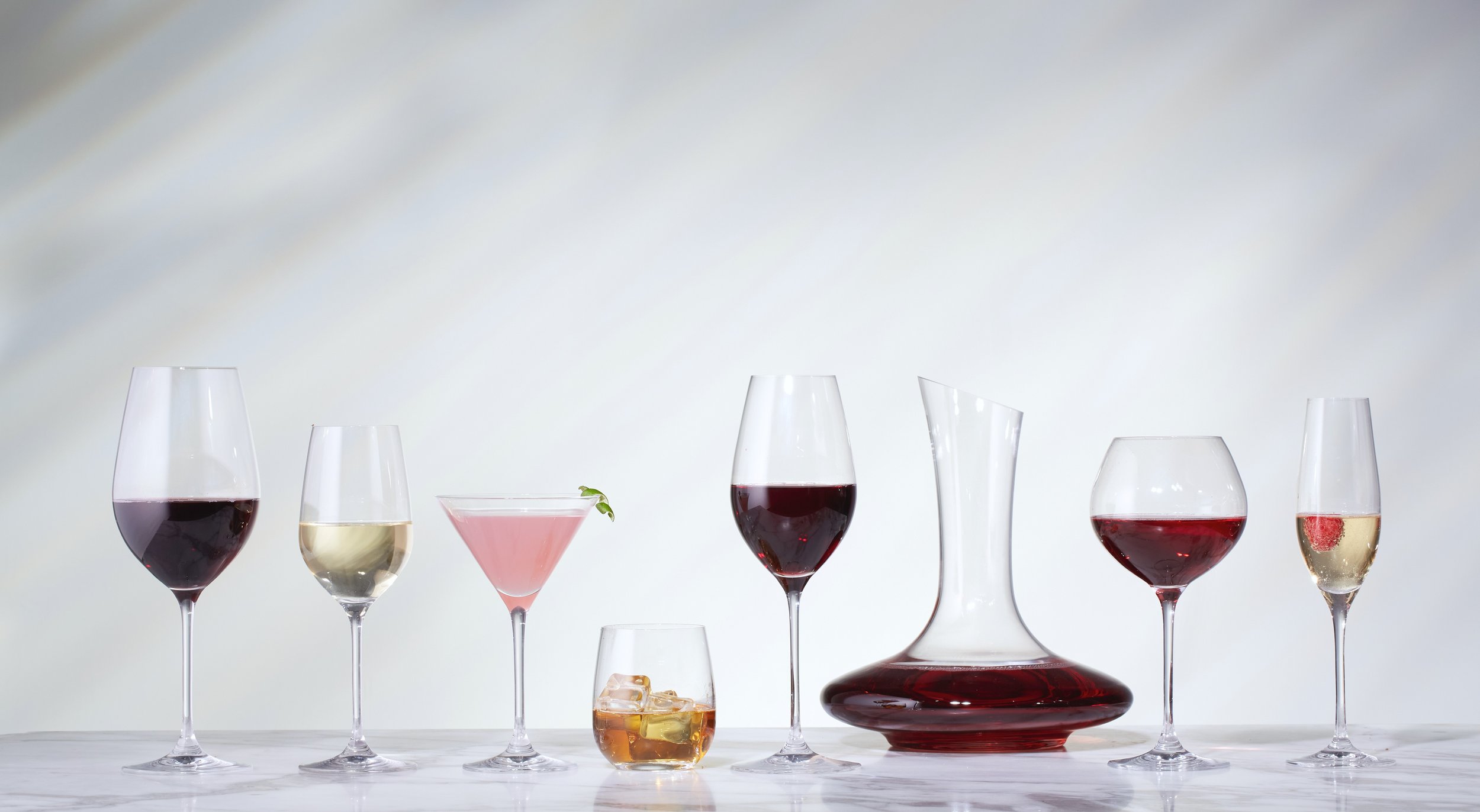
Lead-Free Crystal Glass
What is Lead-Free Crystal Glass?
Lead-free crystal glass is made from silica combined with alternative metal oxides such as potassium, barium, zinc, or aluminum oxides. These elements replace traditional lead oxide while still delivering the brilliance and clarity crystal is known for. The result is a material that captures light beautifully, offering exceptional sparkle without the use of lead.
Because of its refined appearance and ability to be formed into thin, elegant shapes, lead-free crystal is commonly used for wine glasses and premium drinkware.
Advantages of Lead-Free Crystal Glass
Elegant & Refined: Known for its thin rims, brilliant clarity, and stunning light refraction, which is perfect for elevating any table setting.
Lightweight Feel: Despite its luxurious appearance, it remains comfortable to hold and enjoy.
Safer & More Sustainable: Free from lead, making it a more environmentally conscious and health-friendly choice.
Disadvantages of Lead-Free Crystal Glass
More Delicate: Typically more brittle and prone to breakage if dropped.
Premium Price Point: Often more expensive due to its refined craftsmanship and visual appeal.
What Glassware Material Should You Choose?
Choosing the glassware material depends on how you plan to use your glasses and which qualities matter most to you. Factors such as durability, clarity, weight, thermal resistance, design, and price can all influence which type of glass is the best fit.
Borosilicate glass is known for its resistance to temperature changes and lightweight construction, making it a versatile option for everyday drinkware. Soda-lime glass is widely used because of its affordability, versatility, and practicality, while lead-free crystal glass is valued for its exceptional clarity, brilliance, and elegant appearance.
There is no single glassware material that is best for every situation. For everyday use, durability and practicality may be the priority, while wine, Champagne, cocktails, and special occasions may call for more refined glassware.